2026

Mean Hand

a typeface created from the average of hundreds of thousands of handwriting samples

Mean Hand is a typeface built from 814,255 handwritten characters collected by the U.S. government in the early 1990s to automate Census form processing. The samples came from Census Bureau employees and high school students in Bethesda, Maryland. This data became NIST Special Database 19, later adapted into the EMNIST dataset: a benchmark used to train and evaluate handwriting recognition systems, shaping what counts as legible.

Each letter is constructed by stacking thousands of samples and applying a threshold: a mark appears only if that proportion of samples placed ink there. This threshold determines the weight.

At Black, 1 in 20 samples is sufficient; letters accumulate nearly every variation, becoming dense and difficult to read. At Regular, 1 in 3 samples must agree, producing forms that are readable but belong to no individual hand. At Thin, 3 in 4 samples must align; very little survives, and some letters become hard to distinguish.

At both extremes the type is illegible: overwhelmed by variation at one end, reduced to fragments at the other. Legibility emerges only within a narrow threshold. But even there, what resembles handwriting was written by no one.

Because EMNIST defines the baseline for what counts as legible handwriting, its distribution shapes whose writing gets recognized and whose does not. Mean Hand is that distribution made visible as type, available for free download.
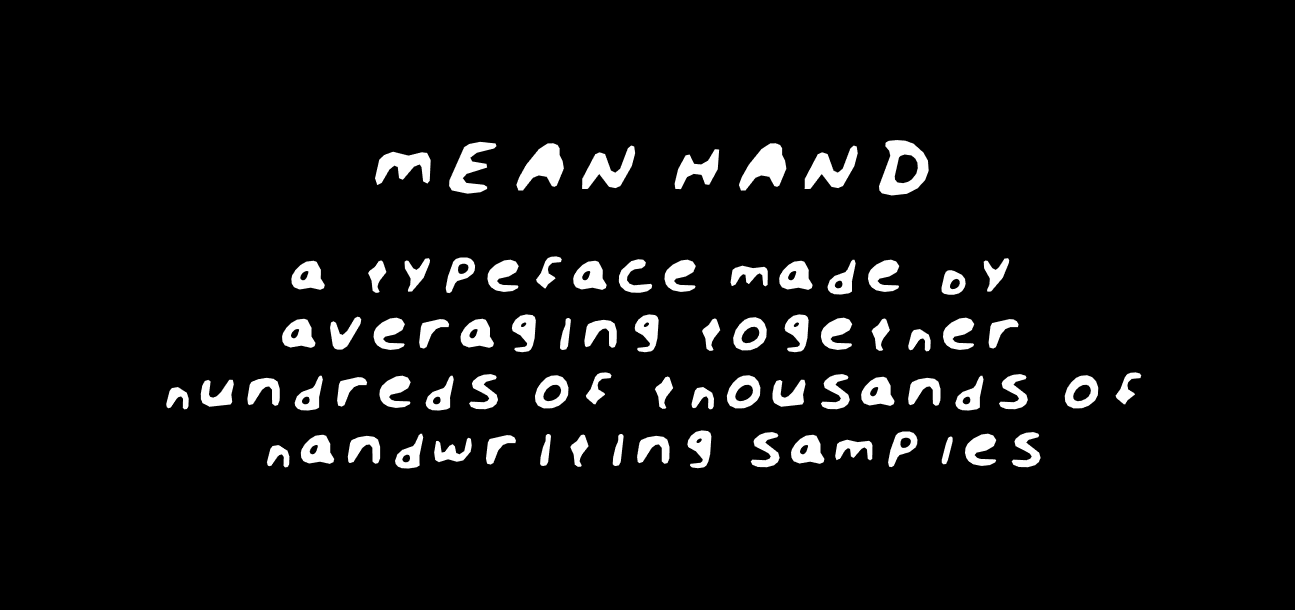
Mean Hand ExtraLight typeface description showing sample text set in the ExtraLight weight

Sample text set in Mean Hand ExtraLight
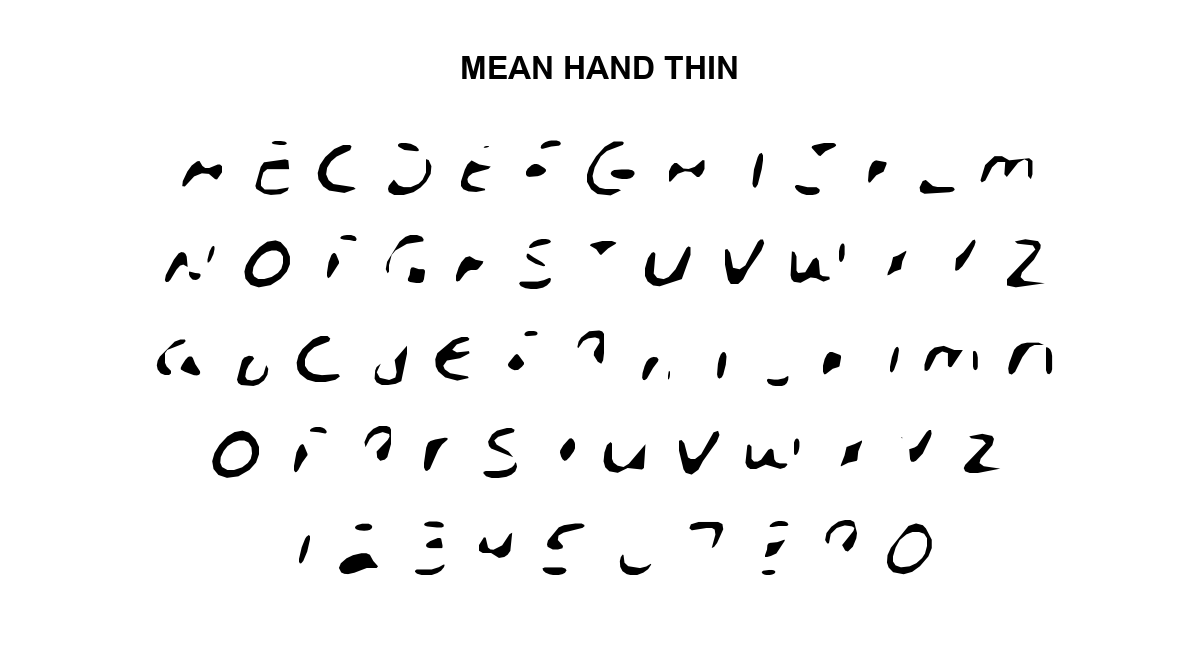
Full character specimen for Mean Hand Thin. Letterforms are fragmentary and barely legible. Most glyphs survive only as partial strokes and arcs. The low consensus required to reach this weight leaves very little behind.

Mean Hand Thin

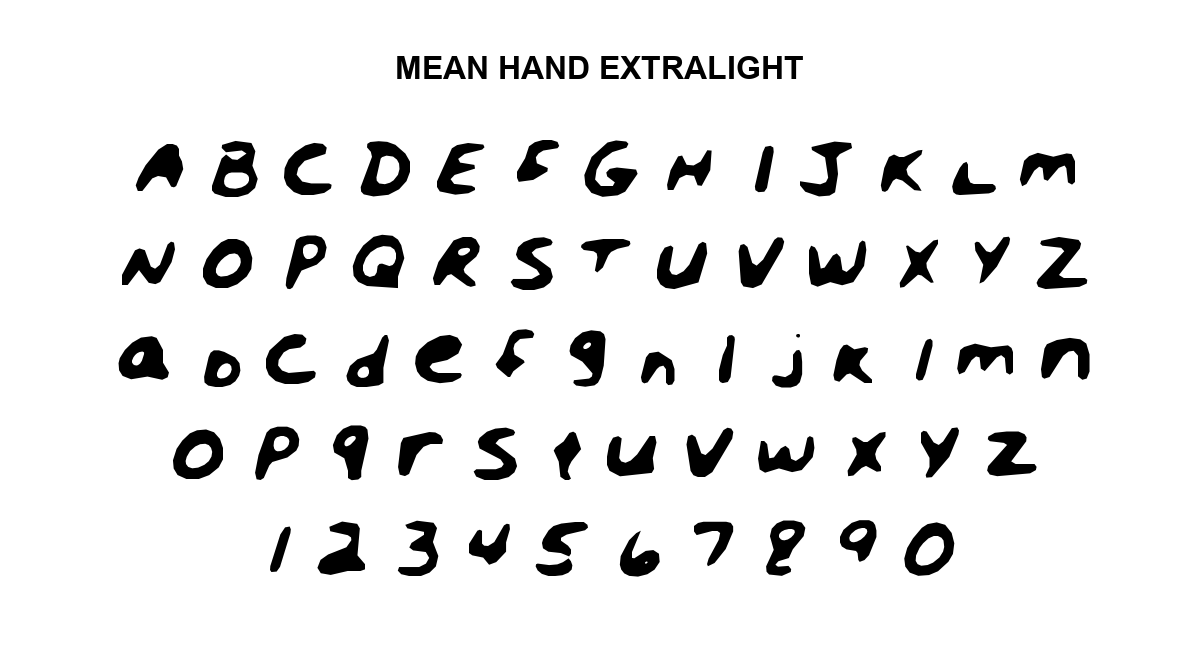
Full character specimen for Mean Hand ExtraLight. Thin, slightly wavering strokes. The handwriting origins are pronounced — letters look hand-drawn rather than designed.

Mean Hand ExtraLight

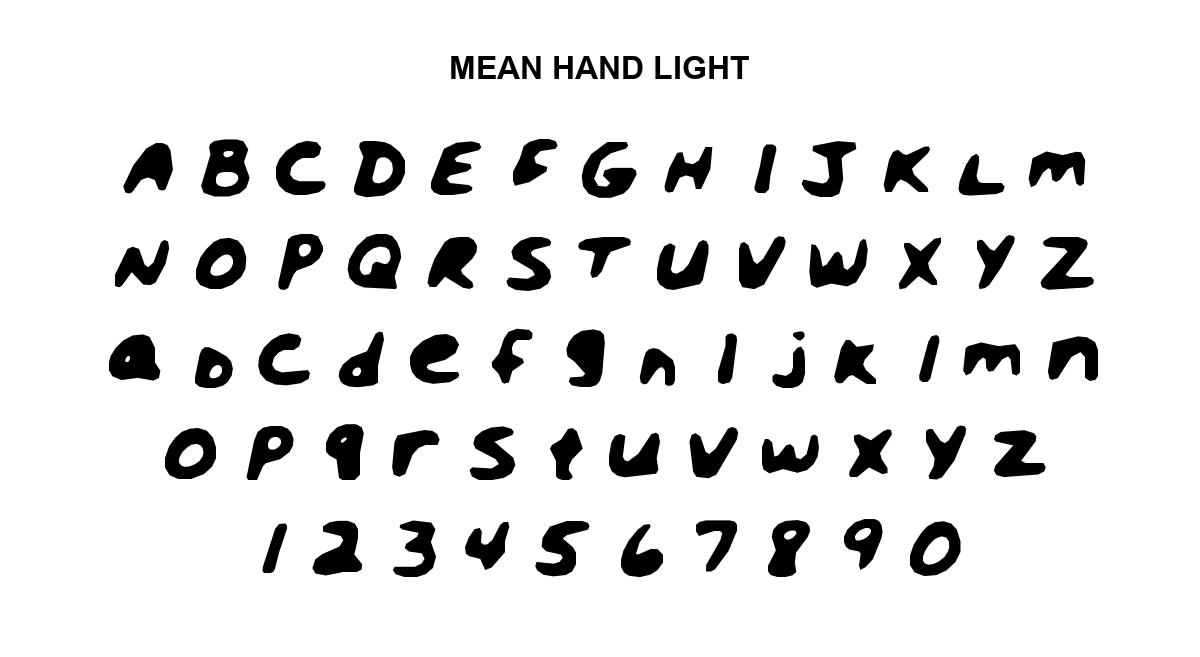
Full character specimen for Mean Hand Light. Lighter strokes with visible irregularity at the edges. Letterforms remain fully legible but begin to show variation in stroke thickness.

Mean Hand Light

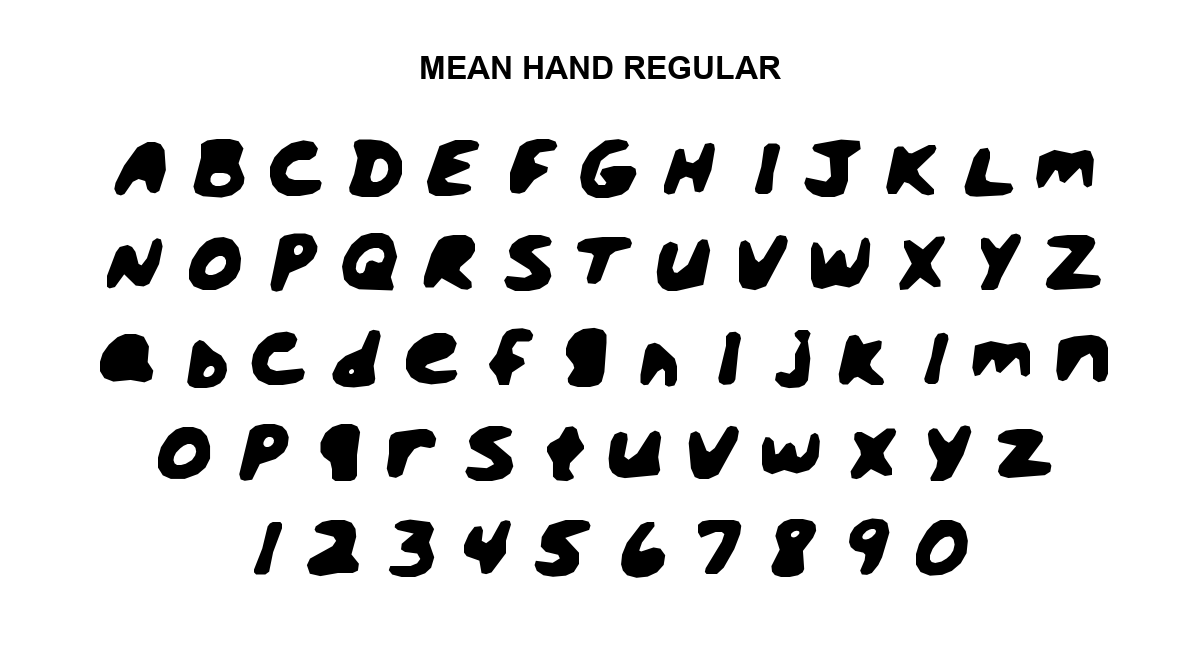
Full character specimen for Mean Hand Regular. Clean and legible. Strokes are moderate in weight with soft edges — recognizably handwriting-derived but belonging to no individual hand.

Mean Hand Regular

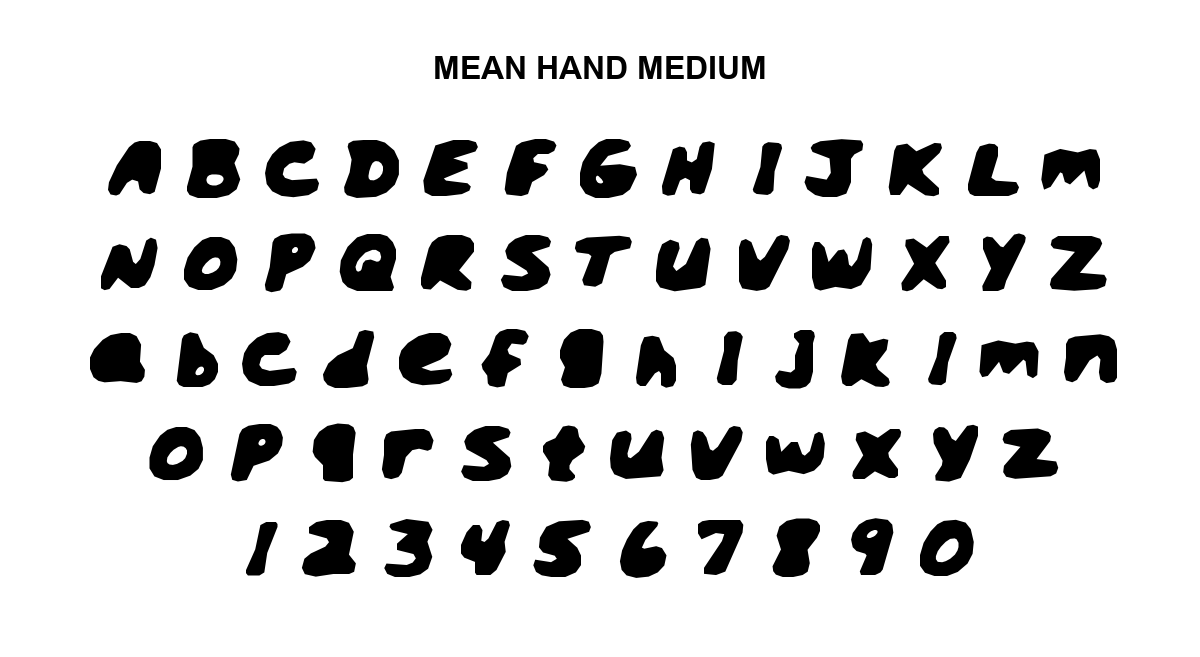
Full character specimen for Mean Hand Medium. Balanced weight with clear, readable letterforms. The handwriting origins are visible in the uneven stroke edges and informal proportions.

Mean Hand Medium

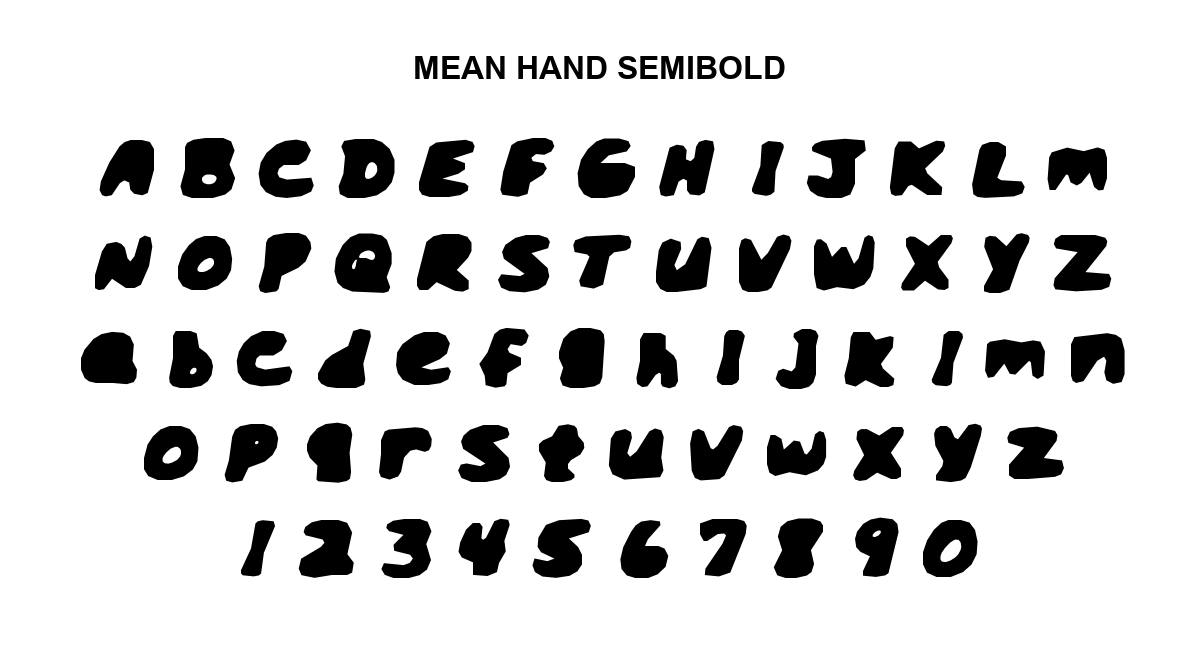
Full character specimen for Mean Hand SemiBold. Sturdy letterforms with smooth, slightly irregular outlines. Counters are open and glyphs are fully legible.

Mean Hand SemiBold

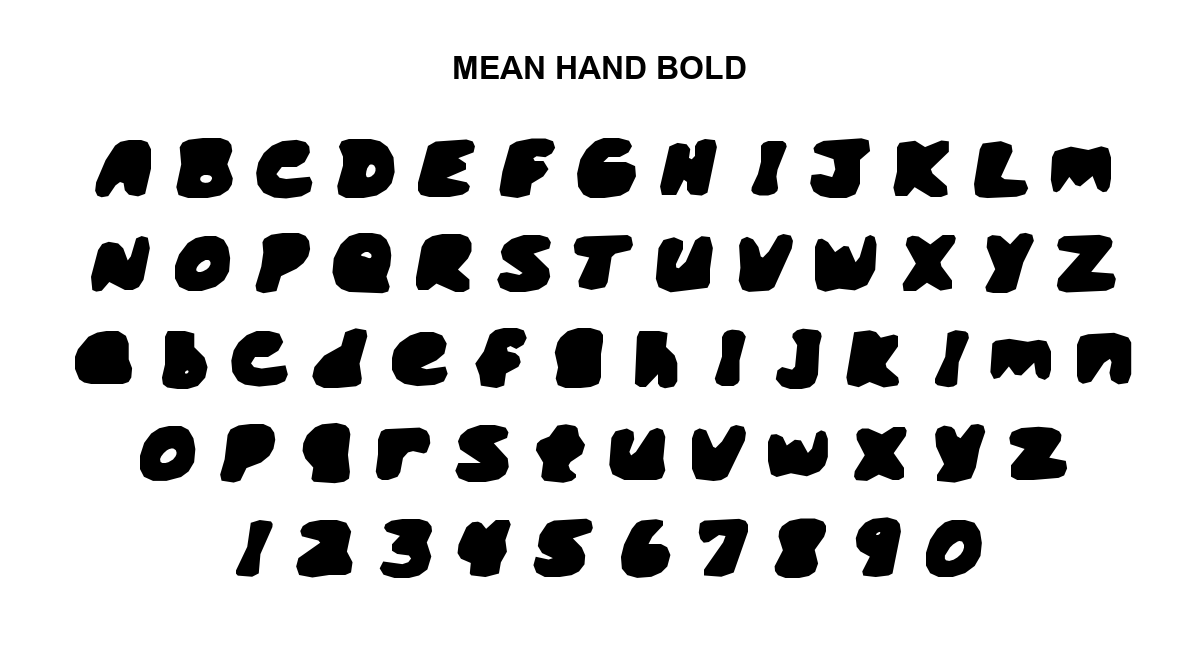
Full character specimen for Mean Hand Bold. Letterforms are thick and rounded with open counters. The organic, handwriting-derived quality of the outlines is clearly visible.

Mean Hand Bold

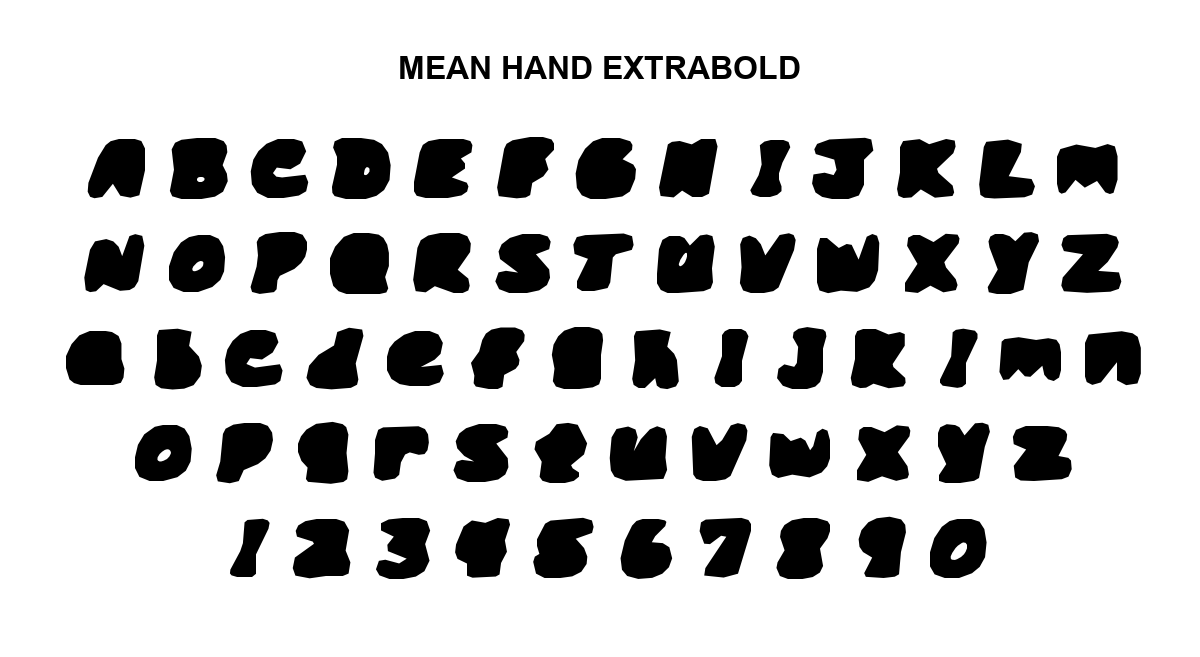
Full character specimen for Mean Hand ExtraBold. Letterforms are very heavy with tight counters and soft, irregular outlines. Legible but dense.

Mean Hand ExtraBold

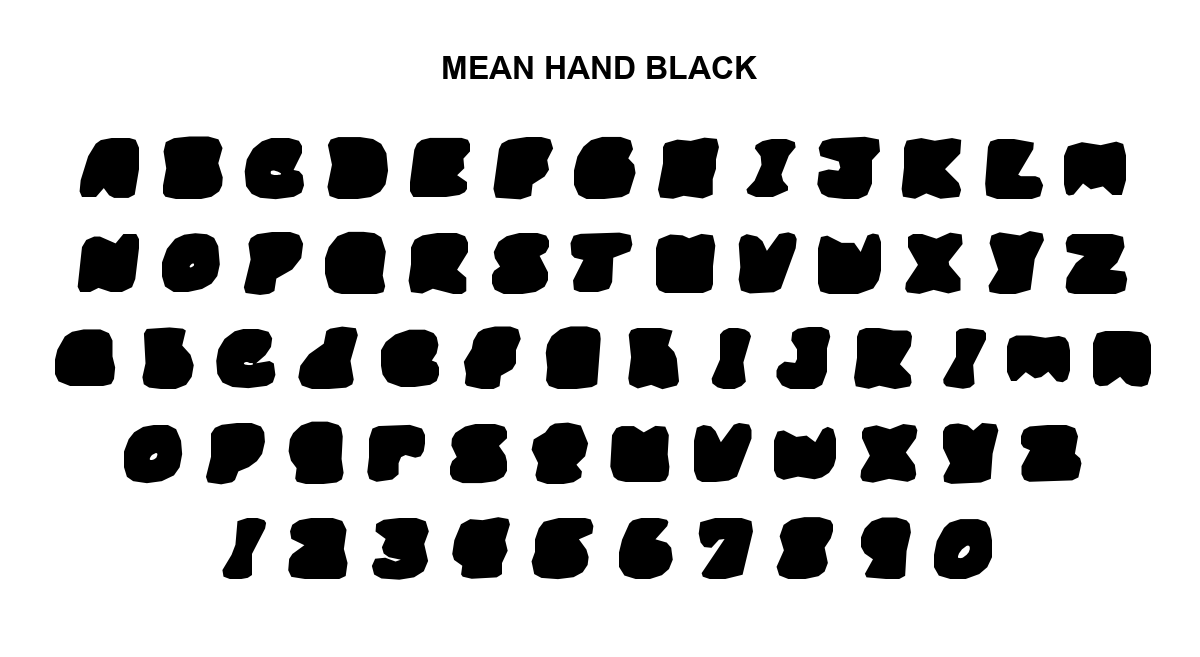
Full character specimen for Mean Hand Black. Letterforms are extremely heavy — counters nearly closed, outlines irregular and bulging. Several glyphs are difficult to distinguish from one another at this weight.

Mean Hand Black